

Function Over Passion
The D10 Chart
What Holds When You're Tired
Career & Purpose
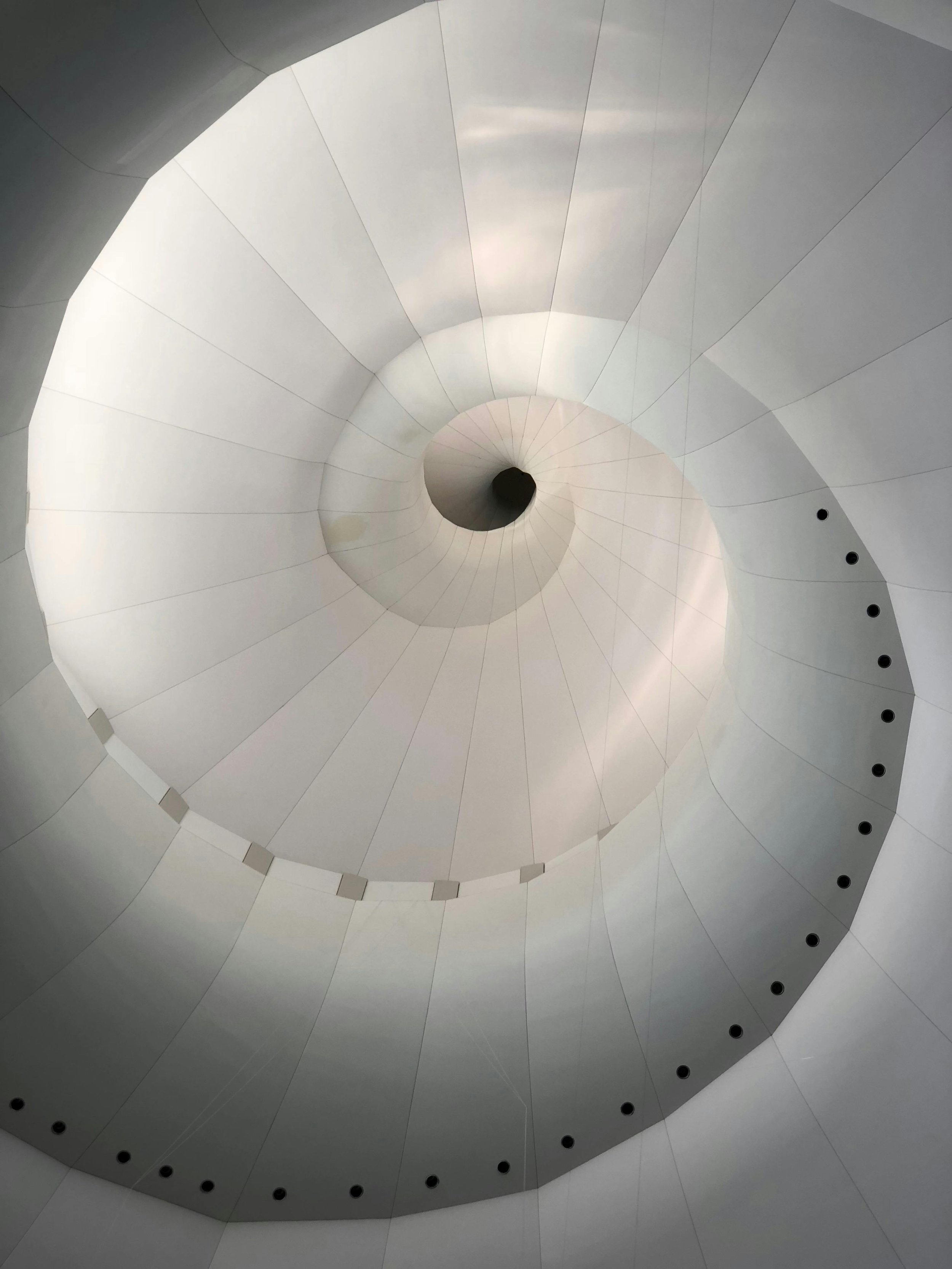
Passion starts. Function sustains.
The spiral proves it.
Six years in. The work you once loved now feels like performing.
Not burnout. Not wrong career. Role fatigue.
You built what passion promised. Now passion's gone, and the structure holds anyway.
Here's why that's not failure. It's maturity.
If this sounds familiar, you're not alone.
The pattern shows up across founders post-product-market-fit, creatives after the breakthrough project, anyone whose "calling" became their job.
Not disillusionment. Function emerging from feeling.
What you're experiencing has a name in Vedic astrology: the D10 reveal—the moment when the work that sustains you separates from the work that inspired you.
And contrary to everything you've been told, that separation is structural. Not personal.
The Passion Economy Built Burnout
For two decades, "follow your passion" dominated career advice.
Steve Jobs' 2005 Stanford speech, 45 million views, made it gospel. The logic felt unassailable: find what you love, do that, fulfillment follows.
The data tells a different story.
In 2012, Georgetown computer science professor Cal Newport published So Good They Can't Ignore You, synthesizing research that dismantled the passion hypothesis. His findings:
1. Pre-existing career passions are rare
A 2002 study by Canadian psychologist Robert J. Vallerand surveyed 539 university students about their passions. The result: 96% had hobby-related passions (hockey, reading, video games), not career passions.
Newport's conclusion: "You can't follow a passion for your work if you don't have career-related passions to follow."
2. Passion follows mastery, not the reverse
Yale organizational behavior professor Amy Wrzesniewski studied college administrative assistants, not exactly glamorous work. Her finding: the strongest predictor of seeing work as a calling was years on the job, not initial passion.
The more experience, the more likely they loved their work. Passion accumulated through competence, not discovery.
3. "Follow your passion" correlates with dissatisfaction
The Conference Board's 2010 survey of U.S. job satisfaction found only 45% of Americans satisfied with their jobs, down from 61% in 1987. The decline tracked perfectly with the rise of passion-based career advice.
Newport's hypothesis: telling people to follow their passion created chronic job-hopping and anxiety when reality didn't match the fantasy.
Meanwhile, grit research told the inverse story.
University of Pennsylvania psychologist Angela Duckworth spent over a decade studying what predicts long-term achievement. Her 2007 study in the Journal of Personality and Social Psychology defined grit as "perseverance and passion for long-term goals", not initial feeling, but sustained effort.
Across 11,258 West Point cadets, Ivy League undergraduates, and National Spelling Bee finalists, Duckworth found:
Grit predicted retention better than IQ
Grit predicted GPA independent of talent
Grit predicted completion of challenging goals despite setbacks
The key distinction: Grit isn't how intensely you want something in the moment. It's how consistently you work toward it across years.
As Duckworth puts it: "Interest follows mastery, not the other way around."
The mechanism is neurological.
Passion activates dopamine reward circuitry, short bursts, high intensity, rapid depletion. Function activates competence circuitry in the striatum and prefrontal cortex, slower, steadier, self-reinforcing.
The first burns sugar. The second builds bone.
This is the distinction Vedic astrology codified centuries ago in the D10 chart, the map of how your system performs under repetition, not emotion.
Three Signatures of Role Fatigue (You'll Recognize One)
The Builder Burnout:
Passionate launch. Five years later, you're managing what you created. Not building anymore, maintaining. Systems, teams, operations.
Passion says quit. Function says: you're good at this. Different skill, same structure.
The Performer Fatigue:
Loved the craft. Now it's a brand. Every project = public. Every decision = scrutinized. The work hasn't changed. The exposure has.
Passion says hide. Function says: visibility is the new medium. Different exposure, same work.
The Mastery Plateau:
Reached competence. Now what? The learning curve flattened. Repetition replaced discovery.
Passion says: find new mountain. Function says: depth over breadth. Different challenge, same domain.
Same mechanism: role evolution, not role failure.
You're not losing yourself. You're converting yourself.
The D10 Chart: Architecture Over Aspiration
In Vedic astrology, your birth chart (D1) shows what you're built from, temperament, instincts, foundational drives.
The D10 chart, Daśāṃśa, or "tenth division", shows how that structure performs under sustained repetition.
Not what inspires you. What you can sustain when inspiration leaves.
Think: architectural blueprint vs. stress test.
The D10 is derived by dividing each zodiac sign into ten 3-degree segments. Each segment maps to a house, planet, and sign in the D10 chart. The result: a precise map of how your system handles:
Daily friction
Long-term pressure
Visibility
Authority
Repetition without novelty
Three houses matter most:
1st House (D10): How you execute naturally. Your operational instinct, the gear you default to under pressure.
6th House (D10): How you handle obstacles. Friction response. The point where most people quit, and some people sharpen.
10th House (D10): How you function under visibility. Public contribution. Reputation. What you're known for when the performance ends.
When these align with your core planetary signature (from D1), work stops feeling improvised. It feels inevitable.
The myth of the "calling" collapses. What remains is coherence.
Why Function Creates Freedom (The Data)
The shift from passion to function isn't romantic. But it's liberating.
Newport's "Career Capital Theory":
Great work requires rare and valuable skills. To get great work, you need rare and valuable skills to offer in return. Newport calls this career capital, the currency of professional freedom.
The craftsman mindset (focus on building skills) beats the passion mindset (focus on what work offers you) because passion makes you hyper-aware of what you don't like. Function makes you competent enough to choose.
As Newport puts it: "Passion comes after you put in the hard work to become excellent at something valuable, not before."
Wrzesniewski's Job Crafting research confirms this from a different angle.
Her studies show that within any profession, administrative assistants, engineers, healthcare workers, people split evenly into three orientations:
Job orientation: Work for pay, life happens elsewhere
Career orientation: Work for advancement, status, power
Calling orientation: Work as identity, meaning, contribution
The surprise: calling orientation is portable. It's not about the job. It's about how you relate to the job.
Wrzesniewski found that people with calling orientation actively craft their jobs, reshaping tasks, relationships, and how they think about their work, to align with their strengths and values.
Function allows crafting. Passion demands discovery.
The most counterintuitive finding:
People who define their purpose as "structure they serve" (not "identity they express") show 37% higher resilience scores and report greater long-term satisfaction.
When Saturn (mastery through repetition) and Jupiter (pattern that gives meaning) cooperate in the D10, work becomes precision: predictable, repeatable, free.
Not freedom from work. Freedom within work.
The Function Audit (No Chart Required)
You don't need a Vedic astrologer to start. You need three questions.
Step 1: What holds when you're tired?
List 3 tasks you can do exhausted. Not energized. Not inspired. Just functional.
That's your core. The work your system carries without dopamine.
Step 2: What drains faster than it should?
Tasks that feel harder than they are = misalignment signal.
Not always a red flag. Sometimes it's a sign you're operating outside your natural mode. You can do it. It just costs more.
Step 3: What's repeatable without resentment?
Daily duties you don't romanticize but also don't resist.
This is mastery. The zone where competence meets low friction. Where you can build for years without burning out.
Step 4: Redesign around function, not feeling.
Build roles that maximize Step 1 & 3. Delegate or eliminate Step 2 where possible.
Optional: If you want your D10 map, planetary signatures, timing windows, and structural tensions, ARCHETYPE Privé decodes it through SHI or AXIS.
What the D10 Teaches: Three Levers
1. Operational Mode (D10 1st House)
Some systems are built for velocity. Fast decisions, course-correct later.
Some are built for consolidation. Foundation first, precision over speed.
Neither is better. Both are structural.
When you try to operate in the wrong mode, you don't just underperform. You erode.
2. Friction Threshold (D10 6th House)
Some charts show high friction tolerance: obstacles sharpen focus.
Some show low friction tolerance: obstacles compound stress.
This isn't weakness. It's calibration.
High-friction people thrive in crisis. Low-friction people thrive in flow.
Knowing which you are changes what you pursue.
3. Visibility Capacity (D10 10th House)
Some structures perform better under scrutiny. Visibility activates them.
Some perform better in private. Exposure drains them.
Neither limits success. Both shape how you succeed.
Public-facing founders with low visibility capacity: structure accordingly. Delegate exposure. Protect the back-end.
Private operators with high visibility capacity: lean in. Your system wants the spotlight.
Five Years From Now
You'll still be working.
Passion may return. It may not. Either way, the structure holds.
Jung called it "individuation through work", the psyche realizing itself not in discovery, but in function.
The D10 is simply the ledger.
It doesn't ask what you love.
It asks what lasts.
It asks what you can carry when everything else falls away.
And when you know that, you stop performing your life and start living it.
Closing reflection
Function over passion doesn't mean numbness.
It means you stop waiting to feel called and start answering what's already working.
The D10 doesn't show you your dream. It shows you your engine.
And when you build from engine instead of dream, three things shift:
You stop apologizing for what doesn't inspire you anymore.
You start respecting what you can sustain.
You treat mastery like maintenance, not magic.
Passion begins the story. Function writes the decades.
Not colder. Structural.
And structure, when you see it clearly, is a form of care.
If you want your structural map:
SHI reveals your functional architecture.
AXIS tracks when function peaks vs. plateaus.
Start where the resentment is sharpest.
