

Your Animal Isn't Here to Love You. Here's What It's Actually Doing.
Disclaimer
This article explores behavioral research and symbolic frameworks. It doesn't replace veterinary care or mental health treatment. For clinical issues, consult licensed professionals. PACT uses Vedic astrology as interpretive lens, not empirical science.
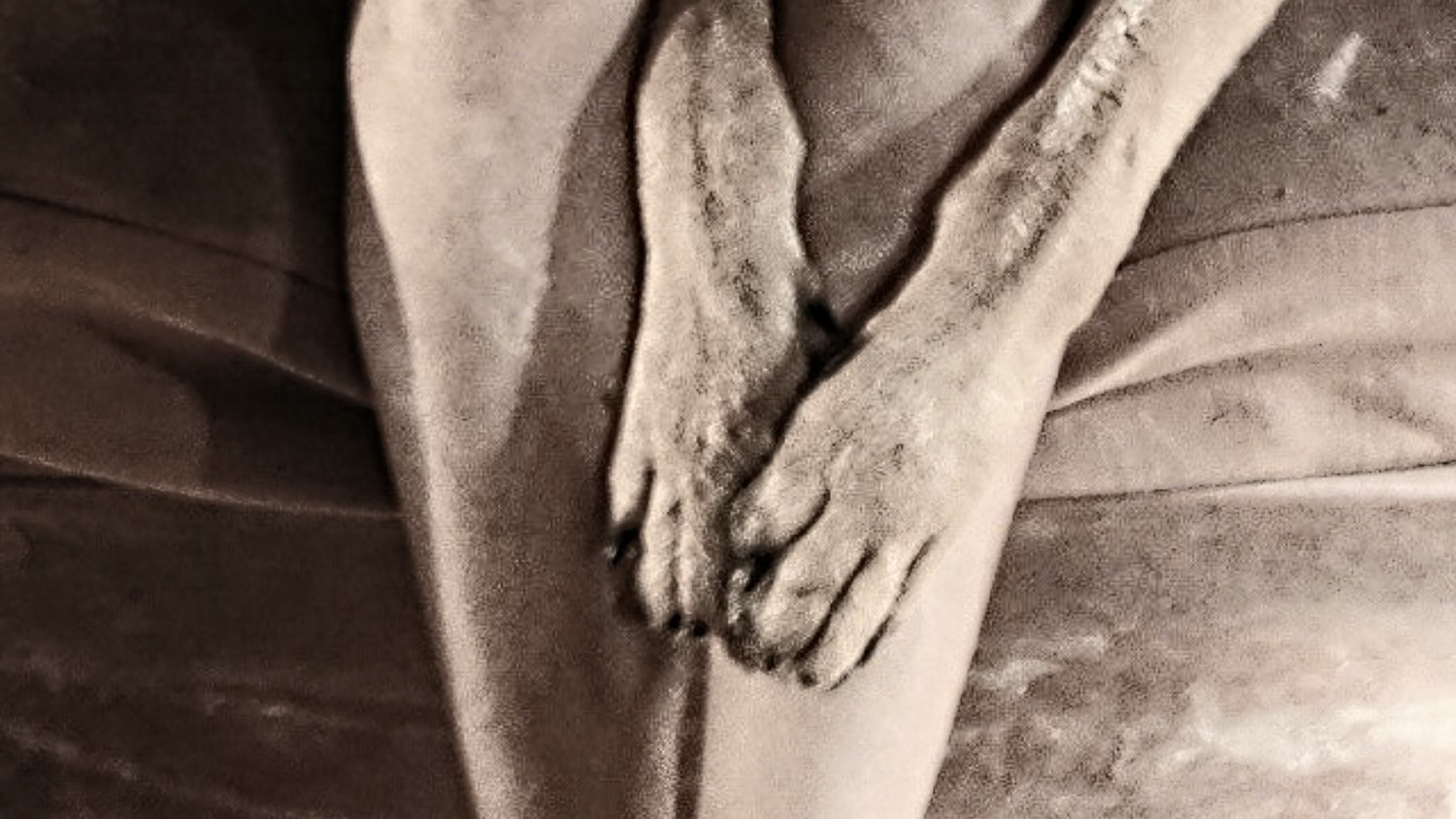
It’s not just affection. It’s regulation.
Your animal tracks what you don’t say out loud.
The Sentence Nobody Wants to Hear
Your animal doesn't love you the way you think it does.
Not because the bond isn't real.
But because what we call "love" and what animals do behaviorally aren't the same thing.
Research shows dogs track your cortisol through scent. Cats synchronize with your stress patterns. Horses mirror tension you haven't admitted to yourself yet.
Is that love? Maybe.
Is it regulation? Definitely.
And once you see the mechanics, the bond becomes more useful than sentiment alone.
MYTH #1:
"Unconditional Love" Is the Gold Standard
What you've been told:
"My dog loves me no matter what. Pure devotion."
What the research shows:
Dogs synchronize stress levels with their owners. When your cortisol stays elevated for weeks, your dog's cortisol follows (Sundman et al., 2019).
Translation:
Your dog's "devotion" operates within the constraints of your nervous system. When you're chronically dysregulated, your dog compensates, often at metabolic cost.
The reframe:
What looks like unconditional love is conditional regulation. Your dog responds to what your system broadcasts, not to your story about being fine.
Less romantic. More reliable.
(And if you're feeling defensive: normal. You've been taught love is the ultimate metric. But for your animal's wellbeing, structure matters more than devotion.)
MYTH #2:
"My Animal Chose Me"
What you believe:
"We found each other at the perfect time. Meant to be."
What's measurable:
You adopt during a breakup → Your cortisol spikes, you stop performing stability, your dog responds to the signal change.
You rescue a cat during insomnia → Your breath rhythm fractures, your cat registers nocturnal dysregulation.
You get a horse after burnout → Your body says "threat" while your voice says "calm," the horse declines the contradiction.
Clean reframe:
Your animal didn't choose you. Your animal arrived when your system became legible.
Timing isn't magic. It's architecture.
And architecture you can work with. Magic just leaves you waiting.
The Sidereal Timing Layer
In Vedic astrology, we map when animals enter lives against active planetary cycles, not as fate, but as symbolic coordinates.
What domain was under pressure when your system became legible?
Career collapse? Relational rupture? Health crisis? Identity shift?
That timing isn't random. It's responsive.
When we read Entry in PACT, we're asking: What cycle was peaking? What threshold were you crossing? What was your system trying to reorganize?
Not prediction. Pattern recognition.
The animal didn't arrive because Saturn transited your 6th house. The animal arrived because you became detectably different during that structural pressure, and animals respond to detectability.
Same timing. Different frameworks. Both useful.
MYTH #3:
"More Animals = More Love"
What you think:
"A second dog will keep the first one company. They'll be best friends."
What actually happens:
You just added exponential complexity.
1 animal = 2 relational vectors
2 animals = 6 relational vectors
3 animals = 12+ relational vectors
What prevents chaos (research-backed protocol):
SANCTUARY → Resident animal can opt out completely. Not "mostly alone." Alone.
ROUTES → Separate movement paths. Nobody cornered. Nobody guarding doorways.
INTRODUCTIONS → Staged. Slow. Scent-first. Exits available. No forced proximity.
Dry note:
"We'll see how it goes" is not a plan. It's a genre.
And the genre is: regret, three weeks in, when someone's bleeding or the house smells like stress pheromones.
(You're not a bad person. You're architecturally under-prepared. Different problem, different solution.)
CLIENT EXAMPLE
Sophie, creative director, added a second dog. First dog developed resource guarding within 8 days.
Vets found nothing. Trainers said "jealousy."
PACT assessment:
"You added relational architecture without spatial design. The resident dog is compensating for sanctuary collapse."
Protocol:
Sanctuary (bedroom, resident-only, door open 24/7), separate feeding stations, staggered walks, 20-min solo time twice daily.
Timeline:
Resource guarding stopped Day 11. Stress-barking down 80% Week 3.
Note: Sophie acted fast. Typical timeline: 3–8 weeks. Results vary.
Not magic. Structure.
→ Want to see your bond's full pattern?
PACT maps Entry (sidereal timing), Domain (structural pressure point), and Signal (behavior tracking over time).
Not mysticism. Diagnostics.
MYTH #4:
"Bad Behavior = Bad Animal"
What you diagnose:
"My cat is anxious. My dog is aggressive."
What's often true:
Your animal mirrors structural instability you haven't named yet.
The correlation (not causation, but worth examining):
Dogs with "separation anxiety" often live with humans in chronic performance mode. You maintain composure, your system screams threat. Your dog doesn't recognize that baseline as safe.
Dogs showing "aggression" often live in households with unacknowledged tension, suppressed conflict, financial stress. You mask low-grade threat. Your dog escalates to match the hidden signal.
Horses labeled "stubborn" respond to body-voice contradiction. Your shoulders brace, your breath shallows, your legs say "go." The horse reads the louder signal: your body.
Reframe:
Most behavior problems correlate with system-level stress. Your animal shows symptoms first.
Like a canary in a coal mine. Except the canary is a 60-pound dog who just ate your couch.
(If you're feeling called out: you're not alone. Most people spend years projecting "problem" onto the animal while missing system instability.)
MYTH #5:
"I Just Need to Love Them More"
What you believe:
"More affection, more treats, more time. Love fixes everything."
What research shows:
Affection without structure often increases anxiety.
Unpredictable affection activates the same neural pathways as gambling—your animal stays hypervigilant, never knows when the next reward arrives.
Consistent structure (predictable routines, clear boundaries, reliable responses) reduces cortisol more effectively than frequent but random affection.
Translation:
Your animal doesn't need more love.
It needs you to stop performing calm when your body isn't calm.
It needs you to detect your own thresholds earlier.
It needs you to stop asking it to stabilize what you refuse to structure.
That's not cruelty. That's clarity.
And clarity is often more loving than affection.
Affection says: "I care."
Clarity says: "I care enough to do the work so you don't have to carry my chaos."
Most people prefer affection because it's easier.
Your animal prefers clarity because it works.
What Your Animal Actually Does
Not loving you.
Not judging you.
Reading you.
What animals track (documented):
Dogs detect cortisol, adrenaline, stress-related chemicals through scent (Wilson et al., 2022)
Cats respond to breath rhythm shifts, routine disruptions, nocturnal movement changes
Horses react to rider tension within 0.3 seconds of onset
The pattern:
Your animal responds to what you are, not what you say you are.
Why it feels personal:
Your animal sees past your performance. Past "I'm fine."
Why it's destabilizing:
You've spent years narrating your way through discomfort. Your animal doesn't have that option.
Why it's valuable:
Your animal gives you feedback your therapist can't. Real-time. Continuous. Non-judgmental. Free.
Your dog doesn't charge €200 an hour.
Your cat doesn't take notes.
Your horse doesn't nod while you spiral.
They just register structural truth and respond.
And once you stop needing validation and start reading feedback, the bond shifts from reassurance to precision.
The ARCHETYPE Privé Lens (PACT)
We treat the bond as a diagnostic field.
PACT Framework:
Entry: When the animal entered your story—mapped through sidereal astrology as symbolic timing coordinate (interpretive, not causal).
Domain: Where your system was under structural pressure (career, relational, health, identity).
Signal: How the animal's behavior correlates with your system stabilization over time.
Important: Vedic astrology is symbolic, not empirical science. We use it for pattern recognition, not prediction.
No fog. Clean read.
What did your animal notice first that you're only now beginning to see?
The Uncomfortable Truth (And Why It's Relief)
Your animal isn't here to make you feel better.
It's here to make you see clearer.
Because feeling better is temporary. Seeing clearly is structural.
Feeling better requires perfect conditions.
Seeing clearly works in any conditions.
So when your dog shows up before you've decided to leave,
when your cat intervenes at 3 AM before you've registered the panic,
when your horse declines the gate before you've admitted you're struggling,
they're not withholding love.
They're offering precision.
And here's what shifts when you accept that:
You stop asking your animal to validate your emotional story.
You start reading the structural feedback they're giving.
You stop interpreting everything through "does my animal love me?"
You start asking: "What is my animal tracking that I'm missing?"
You stop treating threshold detection as cute.
You start treating it as diagnostic data you're getting for free.
The bond doesn't diminish. It clarifies.
And clarity is more useful than comfort.
More reliable than reassurance.
More valuable than validation.
Not mysticism. Not sentimentality.
A purring, panting, snorting form of structural truth.
What To Do Now
If you're feeling defensive:
Your animal doesn't need romance. It needs you to stop leaking stress signals and calling it "fine."
Research is clear: chronically stressed humans create chronically stressed animals. Not because animals "catch feelings." Because stress synchronization is physiological.
If you're feeling relieved:
You've sensed this gap for a while. Now you have language for it. And research backing it.
If you're feeling curious:
Your animal has been reading you this whole time.
The question is: are you ready to read back?
Final Note
This isn't an attack on love. Love matters.
But love alone isn't enough.
What your animal needs, what research shows reduces stress, is structure + consistency + predictability.
So:
Stop calling regulation "love" when you mean "my animal compensates for my chaos."
Start calling it precision feedback from a system that can't lie.
Stop asking your animal to carry your unprocessed instability.
Start doing the structural work so the bond shifts from corrective to companionate.
Your animal will still show up.
But it won't have to work as hard.
And honestly?
That's the most loving thing you could do.
Not because you feel more.
Because you see more clearly.
And you build accordingly.
What did your animal notice first?
SOURCES
Sundman, A.S., et al. (2019). "Long-term stress levels are synchronized in dogs and their owners." Scientific Reports, 9, 7391.
Wilson, C., et al. (2022). "Dogs can discriminate between human baseline and psychological stress condition odours." PLoS ONE, 17(9), e0274143.
Nagasawa, M., et al. (2015). "Oxytocin-gaze positive loop and coevolution of human-dog bonds." Science, 348(6232), 333-336.
Overall, K.L. (2013). Manual of Clinical Behavioral Medicine for Dogs and Cats. Mosby.
