

Emotional Support Dogs, Service Dogs & Dog Astrology
Why Your Dog Notices Anxiety
Before You Name It
Mars + Rahu as a protective pattern (PACT lens, not a diagnosis)
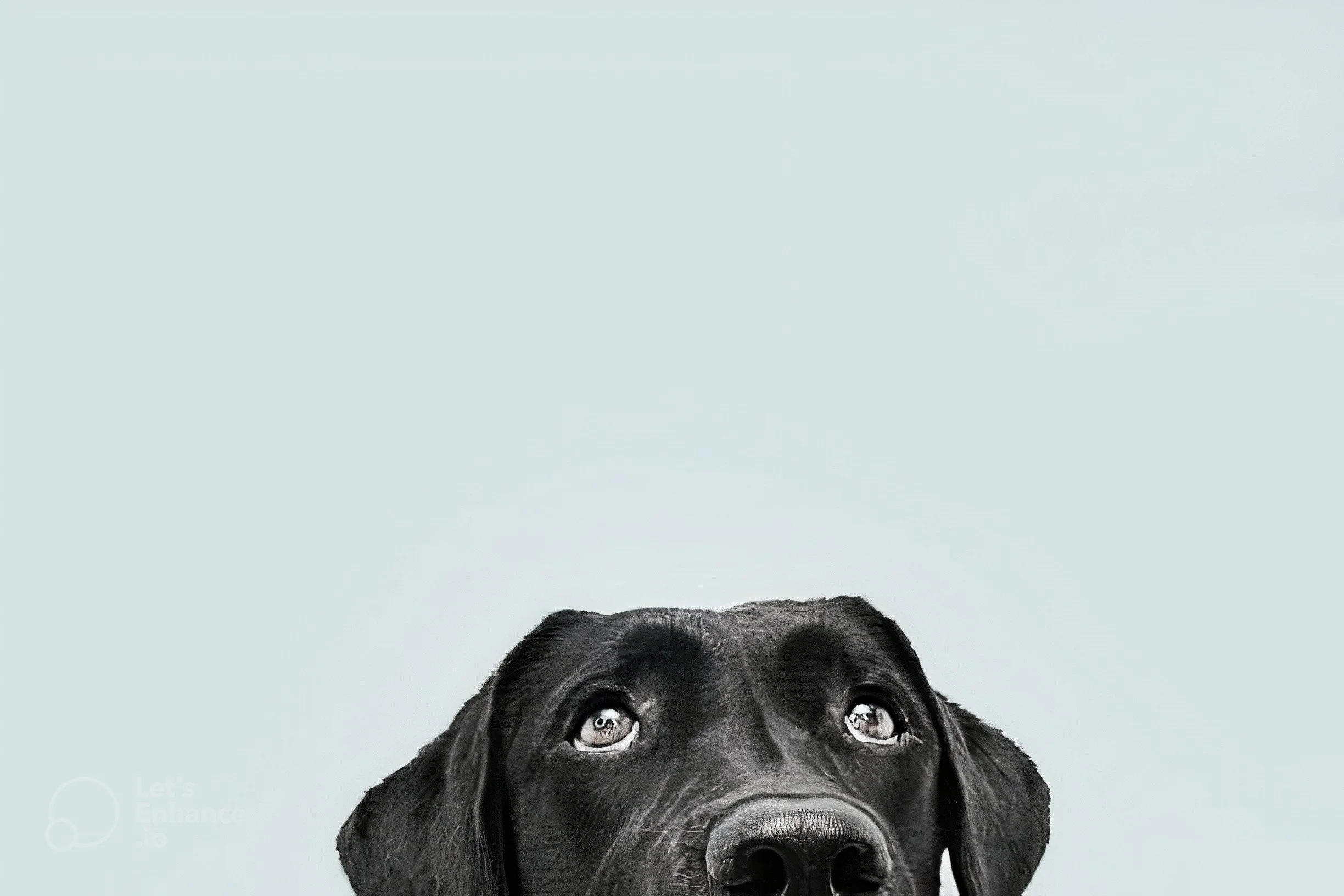
Your dog lives in signal. You live in subtitles.
The subtitles arrive late.
A note before we begin
Three layers. Keep them separate and this stays shareable in smart circles:
Research: what controlled studies support (scent, chemosignals, bonding physiology).
PACT archive: internal pattern frequency (observational, not peer-reviewed).
Sidereal lens: symbolic vocabulary (not causation).
If you blur them, you get internet noise. If you don’t, you get a tool.
Think espresso, not smoothie.
The 3:17 AM Problem
3:17 AM. Your dog sits up, perfectly still, staring at the bedroom door like it owes her rent.
You hear nothing. You do the human thing: you narrate yourself back to sleep.
3:21 AM. The neighbor’s alarm detonates. Sirens. Footsteps. The night gets a plot.
Did your dog “predict” it?
No.
But dogs can register change before your mind commits to a label: danger, anxiety, something is off.
That gap is the whole story.
Your dog lives in signal. You live in subtitles.
And your subtitles tend to arrive late.
A daylight version
11:08 AM. Oat latte, sunglasses, a perfectly neutral smile.
Your dog stops at the café doorway and refuses your “we’re fine” pace.
Nothing happens.
Then someone walks in and your shoulders answer before your mouth does.
Your dog didn’t read the future.
It read the threshold.
(Your nervous system was still editing.)
Label Lag
Most humans don’t feel anxiety first. We feel micro-shift first:
breath thins, jaw tightens, attention skips, posture braces.
Then comes translation. Then the story.
Your dog does not translate. It responds.
So when you say “dramatic,” your dog is often just early.
One clean reframe:
You’re not “bad at intuition.” You’re slow at naming.
Most adults are.
What science supports
(and what it doesn’t)
1) Stress odours, under control.
Under double-blind conditions, dogs can discriminate odour samples collected from humans at “baseline” versus after a stress task.
2) Chemosignals carry emotional information.
Experimental work suggests dogs show systematic behavioral shifts when exposed to human body-odour conditions associated with different emotional states (e.g., fear vs happiness).
3) Gaze can be biochemical.
A controlled study linked mutual gaze to increases in urinary oxytocin in both humans and dogs, supporting a co-regulation loop (with known limitations and individual variability).
What this does not mean:
There is no universal “your dog is always 60–90 seconds ahead” clock.
Use minutes for narrative. Use logs for truth.
Data beats vibes.
The sidereal layer
Rahu is not a planet. It’s a lunar node: a mathematical point tied to eclipse geometry.
In sidereal practice, Mars and Rahu work as shorthand for a specific cluster:
Mars: stance, boundary behavior, fast orientation. “I position.”
Rahu: anomaly detection, baseline deviation. “I don’t buy this.”
Mars + Rahu is not magic. It’s a compact label for a pattern you can observe:
the dog who interrupts your trajectory at the edge of a shift.
If you dislike astrology, keep the behavioral part and call it “pattern language.”
Same method. Less baggage.
One line you can keep:
Your dog doesn’t “sense your anxiety.”
It senses the moment before you can name it.
Share Card
Your dog is early. Your mind is verbose.
Run the Two-Clocks Test for 7 days.
Post your Average Label Lag (minutes). Let the comments argue with the number.
The Two-Clocks Test
(7 days, no belief system)
You need: a notes app. That’s it.
Whenever your dog interrupts you (stop / shadow / block / stare / pressure-anchor), log:
Time
Dog move (one word)
When you could name what you felt (minutes later)
What changed within 10 minutes (sound, person, message, decision, tension, departure)
At the end of 7 days:
Average Label Lag (minutes).
Copy-paste share template:
“Average Label Lag: __ min.
Most common interrupt: __.
Most common trigger: __.”
Bonus rule: don’t over-explain it. Just post the number.
Four modern interrupts (what to do, calmly)
1) Route Correction
Stops, slows, pulls you wide, refuses an elevator or doorway.
Do: pause 10 seconds. Scan. Re-choose. Log.
Boundary intelligence, not stubbornness.
2) Social Intercept
Places itself between you and someone. Insists on leaving a room you’re trying to “make work.”
Do: don’t force the scene. Check body first (jaw, shoulders, breath). Log.
Dry truth: dogs are allergic to performance.
3) Wake-Up Without Noise
Night wake, rigid posture, stare. Nothing “happens”… until it does.
Do: verify. Lights. Listen. Check outside. Log.
You’re not obeying. You’re auditing.
4) Pressure Anchor
Leans, sits on your feet, pins you gently when you’re spiraling.
Do: let it run 30–60 seconds. Exhale longer than inhale. Log.
Not therapy. Mechanics.
Service dog vs ESA
(short, UX-friendly)
Under the ADA, a service animal is a dog individually trained to do work or perform tasks for a person with a disability.
For U.S. air travel, DOT’s final rule aligns with that task-trained definition and no longer treats emotional support animals as service animals.
Where PACT fits
If you’ve run the Two-Clocks Test and want a clean map, we use:
Cue (what your dog flags) → Lag (your label delay) → Response (the repeatable move).
Our archive is observational, not peer-reviewed.
The value is not “proof.” The value is precision you can repeat.
ARCHETYPE Signature
To understand a dog, observe what it protects.
When did your dog arrive? What protection patterns do you recognize?
Your dog already knows. You can too.
Thinking service dog, ESA designation, guide dog training, or second dog adoption?
ARCHETYPE Privé maps planetary architecture and sidereal pattern through PACT module.
Dog function. Human compatibility. Both observable.
What changes Monday
You stop negotiating with the first interrupt.
You stop calling early data “attention-seeking.”
You start treating the pause as information.
Your dog stays the same.
Your timing improves.
That’s the upgrade. Not your personality.
Closing
Mars + Rahu is a language for one thing:
the dog who interrupts your story at the threshold of a shift.
Run the test for seven days.
Once you see your Label Lag, you don’t unsee it.
If your dog keeps stopping you, stop once and listen.
Note: ARCHETYPE Privé proprietary archive cross-referencing Vedic natal chart data with documented animal roles/functions. Observational patterns, not a peer-reviewed study. No certification, no ESA/service documentation, no guaranteed outcomes. Definitions vary by jurisdiction.
Sources
Wilson, C. et al. (2022). Dogs discriminating baseline vs psychological-stress odours.
D’Aniello, B. et al. (2018). Dogs’ behavioral responses to human chemosignals linked to emotional states. Animal Cognition.
Nagasawa, M. et al. (2015). Oxytocin–gaze positive loop in human–dog bonding. Science.
ADA.gov. Service animals: definition + requirements.
U.S. DOT (2020). Traveling by Air With Service Animals
